In-hye
The VegetarianIn-hye is Yeong-hye’s older sister, Ji-woo’s mother, and the owner of a successful cosmetics shop. She is first seen through her brother-in-law’s dismissive assessment of her as attractive, capable, and skilled at keeping a household running; the later narrative gives that competence a more difficult meaning. In-hye has built a life through work and responsibility, but her sister’s illness forces her to confront how much that strength has depended on enduring what she could not prevent. Her care for Yeong-hye is steadfast, yet it repeatedly meets the boundary between protection and control.
Identity and Background
In-hye is four years older than Yeong-hye. Their childhood was marked by their father’s violence toward the family, especially the younger sister. In-hye recalls that their father struck both girls, but Yeong-hye was the one who bore the brunt of his temper. As the eldest daughter, In-hye helped their exhausted mother and prepared broth for their father, a survival strategy that led him to treat her with more consideration. Looking back, she recognizes that the dutiful, self-sacrificing role she adopted was not simply maturity: it was a way to get through the household safely.
That role persisted into adult life. Before her pregnancy, In-hye had used the income from managing a cosmetics store to secure an apartment; the business later grew to three times its original size. After Ji-woo’s birth she briefly visited the shop at night to check that it was running, and, once he began nursery at three, returned to work full-time. She manages the shop while raising her son and, when the family fractures, assumes the practical burden of Yeong-hye’s care as well. Her ability to keep working is presented not as freedom from hardship but as the discipline by which she keeps her life from coming apart.
Sisterhood and Family History
In-hye’s bond with Yeong-hye carries a protective, almost maternal quality. The age difference kept them from competing as children, and Yeong-hye’s vulnerability stirred In-hye’s sense of responsibility toward her. She remembers watching her sister grow from a child who played in the dirt into a married woman, while also noticing that Yeong-hye became progressively harder to read. Her quietness had once coexisted with sociability; over time, it deepened into a withdrawal that In-hye could not interpret.
The family’s housewarming brings that history into the present. When their father tries to make Yeong-hye eat meat, In-hye takes hold of his arm and asks why he is doing it. Her intervention does not stop the assault: Yeong-hye’s brother restrains her, and their father forces the food on her. In-hye later revisits the scene as a chain of missed chances. She wonders whether she could have stopped their father, taken the knife away, or prevented her husband, Mr. Cheong, from becoming involved in what followed. Her memory does not make her responsible for the violence, but it shows how readily she turns the burden of everyone’s actions into a question about what she herself should have prevented.
Work, Care, and Responsibility
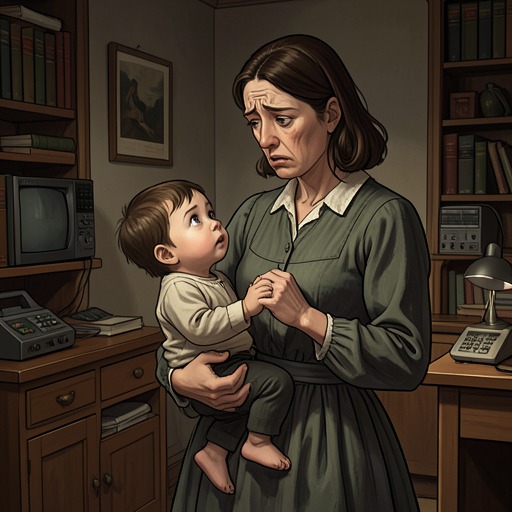
In-hye’s care for Yeong-hye becomes a sustained practical commitment after Yeong-hye is hospitalized. She visits, brings food, and tries to maintain contact even as other family members withdraw. At first, she visits about once a month, carrying fruit, rice cakes, and stuffed fried tofu. Yeong-hye silently eats in the visiting room, and, when In-hye tucks her hair behind her ears, sometimes looks up with a quiet smile. Those ordinary moments briefly let In-hye imagine that her sister might remain in the hospital without everything being wrong between them.
When Yeong-hye disappears from the hospital, In-hye is with six-year-old Ji-woo, who has been ill and is undergoing a lung X-ray. The hospital has not previously called her on her mobile; the nurse’s composed warning that Yeong-hye is missing therefore brings the emergency directly into the middle of In-hye’s responsibilities as a mother. She visits more regularly after the disappearance, going every Wednesday, and continues to shoulder the costs and work of care after their parents and younger brother’s family stop visiting. She keeps the shop open while carrying the scandal and uncertainty surrounding Yeong-hye’s condition.
That responsibility has limits and costs. The doctor explains that Yeong-hye’s refusal to eat is associated with schizophrenia, that the reason for it remains unclear, and that the treatments have not worked. He also warns that her life cannot be protected in the ward indefinitely. In-hye must hear the medical necessity of preserving life alongside Yeong-hye’s rejection of food, medication, injections, and confinement. The novel does not offer her an uncomplicated choice: the person who pays and advocates for her sister is also placed in the position of urging her to accept interventions she fears.
Guilt, Recognition, and Crisis
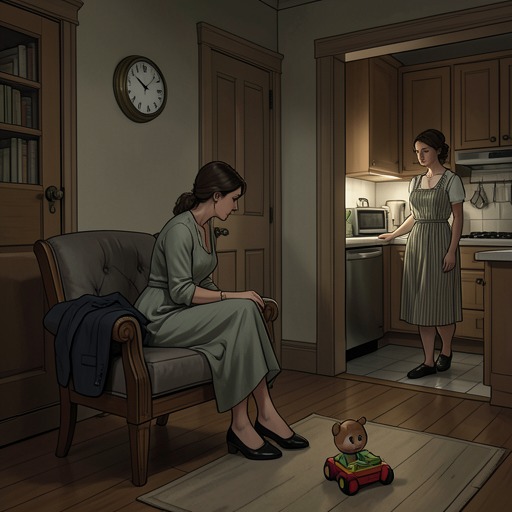
In-hye’s retrospective account repeatedly returns to the housewarming and its aftermath. She asks whether she could have prevented the violence, the self-harm that followed, or Mr. Cheong’s later actions. She knows she could not have predicted what her casual mention of Yeong-hye’s Mongolian mark would prompt, yet still reproaches herself for not recognizing where events were heading. When Yeong-hye is once again isolated in a closed ward, refuses meat, and withdraws from speech, In-hye remains to care for her even as the rest of the family breaks contact.
Her understanding of their childhood changes as Yeong-hye’s condition worsens. She recalls being nine and lost with Yeong-hye on a mountain when her younger sister said they should not go back. At the time, In-hye answered only that they had to find the path before dark. Now she understands the words against the history of their father’s beatings and recognizes that Yeong-hye, docile and unable to resist, had absorbed the harm inwardly. In-hye’s own self-image shifts too: what she had taken for dutiful maturity appears to her as a form of cowardice and self-preservation. The memory makes her sister’s later withdrawal legible as more than a sudden break from ordinary life, without pretending that it can be fully explained.
In-hye also begins to recognize a crisis in herself. During months of insomnia and pain, she considers whether Yeong-hye passed through a comparable state, and whether she herself might have let go of the slender thread connecting her to everyday life if she had not been responsible for Ji-woo. Her occasional laughter with her son briefly interrupts the pain, but the relief is fleeting and unsettles her as much as it comforts him. The contrast between her outwardly functioning life and her private distress recasts her competence: it is a means of continuing, not proof that she is untouched by what has happened.
The Hospital and the Unresolved Ending
Before Yeong-hye stops speaking, she asks In-hye to let her leave the hospital. She explains that people keep making her eat, that she dislikes being forced, and that injections frighten her. In-hye answers that Yeong-hye can scarcely walk and is being kept alive by intravenous treatment; she offers to seek her discharge if Yeong-hye promises to eat. When Yeong-hye turns away and tells her that she is just the same, the accusation exposes the painful resemblance between their roles: In-hye wants to protect her sister, yet is also asking her to comply with demands imposed on her body.
As Yeong-hye becomes critically ill, a doctor tells In-hye that she must be transferred to a main hospital in Seoul for treatment intended to stop gastric bleeding and keep her alive. In-hye takes the admission letter, leaves the nurses’ room, and then collapses in a bathroom and vomits. On the ambulance journey she tries to tell herself that the frightening recollection of Ji-woo is only a dream, while admitting inwardly that she cannot explain how easily she had once decided to leave him behind. She fears that, had the family’s boundaries not been shattered by her husband’s actions and Yeong-hye’s crisis, she might have been the one to break down.
In-hye’s story ends not with a settled judgment but with continued attention to her sister: when Yeong-hye struggles back toward consciousness, In-hye prepares to catch her if she vomits again. She cannot undo the violence of their childhood or guarantee Yeong-hye’s recovery, and her own exhaustion remains unresolved. Her perspective nevertheless makes the history of care visible: it records both the practical labor of staying beside a vulnerable person and the moral strain of trying to keep that person alive without mistaking coercion for consent.